
Visualizing prison-industrial complex impacts “500 Miles Out” from Central Appalachia
A new exhibition at Rhizome DC explores the rural-urban impacts of the prison-industrial complex and transregional solidarity.

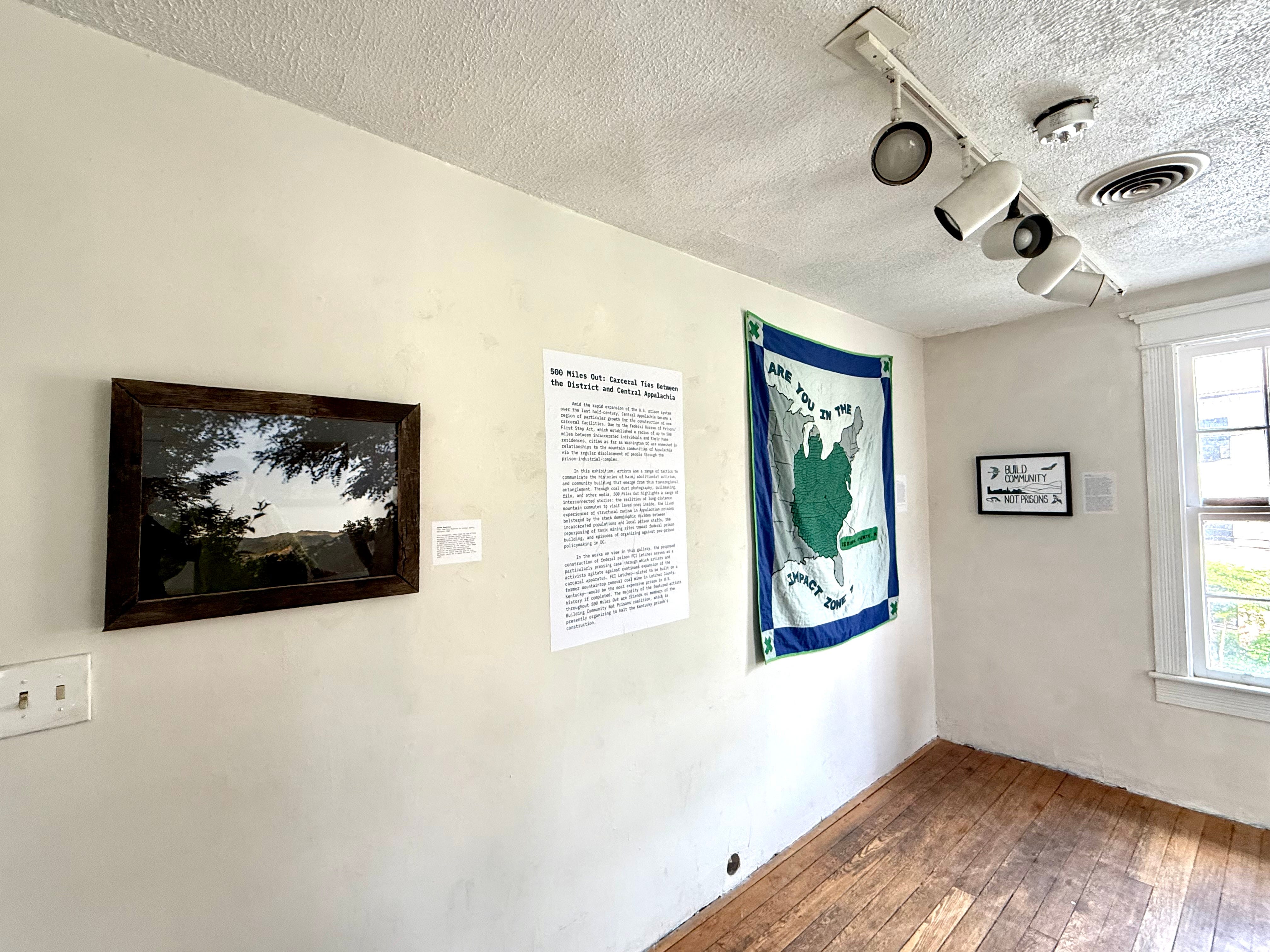
On view at Rhizome DC, 500 Miles Out: Carceral Ties between the District and Central Appalachia visualizes the impact of the prison-industrial complex through photographs, quilts, and multimedia pieces. Throughout the exhibition, the artists represent the people, places, and movements working across regions, sharing the importance of rural-urban solidarity in communicating about and agitating against the violences of the carceral system.
The exhibition features artists Jonas N.T. Becker, Lacy Hale, Jared Hamilton, Jordan Martinez-Mazurek, Comrade Pitt Panther, Tiffany Pyette, Kat Smith, and Sylvia Ryerson, and is curated by Gabrielle Christiansen.
500 Miles Out gets its name from the Federal Bureau of Prisons’ First Step Act of 2018, which established a radius of up to 500 miles between incarcerated individuals and their homes and loved ones.
Today, Central Appalachia is one of the most concentrated regions of rural prison and jail growth in the United States — and broadcasting stories from the carceral system isn’t new to the region. 500 Miles Out includes a video installation that presents a segment from the documentary Calls from Home (dir. Sylvia Ryerson, 2023), which shares the impact of the eponymous radio show from WMMT 88.7 Mountain Community Radio, run through our partners at Appalshop. This longstanding, weekly broadcast shares messages of love from families to those incarcerated in Central Appalachia, and it received a Kentucky Rural-Urban Exchange (RUX) Intercultural Microgrant last year to produce a hip-hop album in collaboration with incarcerated individuals in the region, who are now far from home.
Kat Smith’s quilt “Are You in the Impact Zone?” (2026) — part of the Lexington-based artist’s larger project creating quilts and banners with reclaimed materials for grassroots movements across Appalachia — shows the 500-mile radius that would be affected by the proposed construction of the federal prison FCI Letcher in Letcher County, Kentucky, a prison combated in many of the artworks on view.
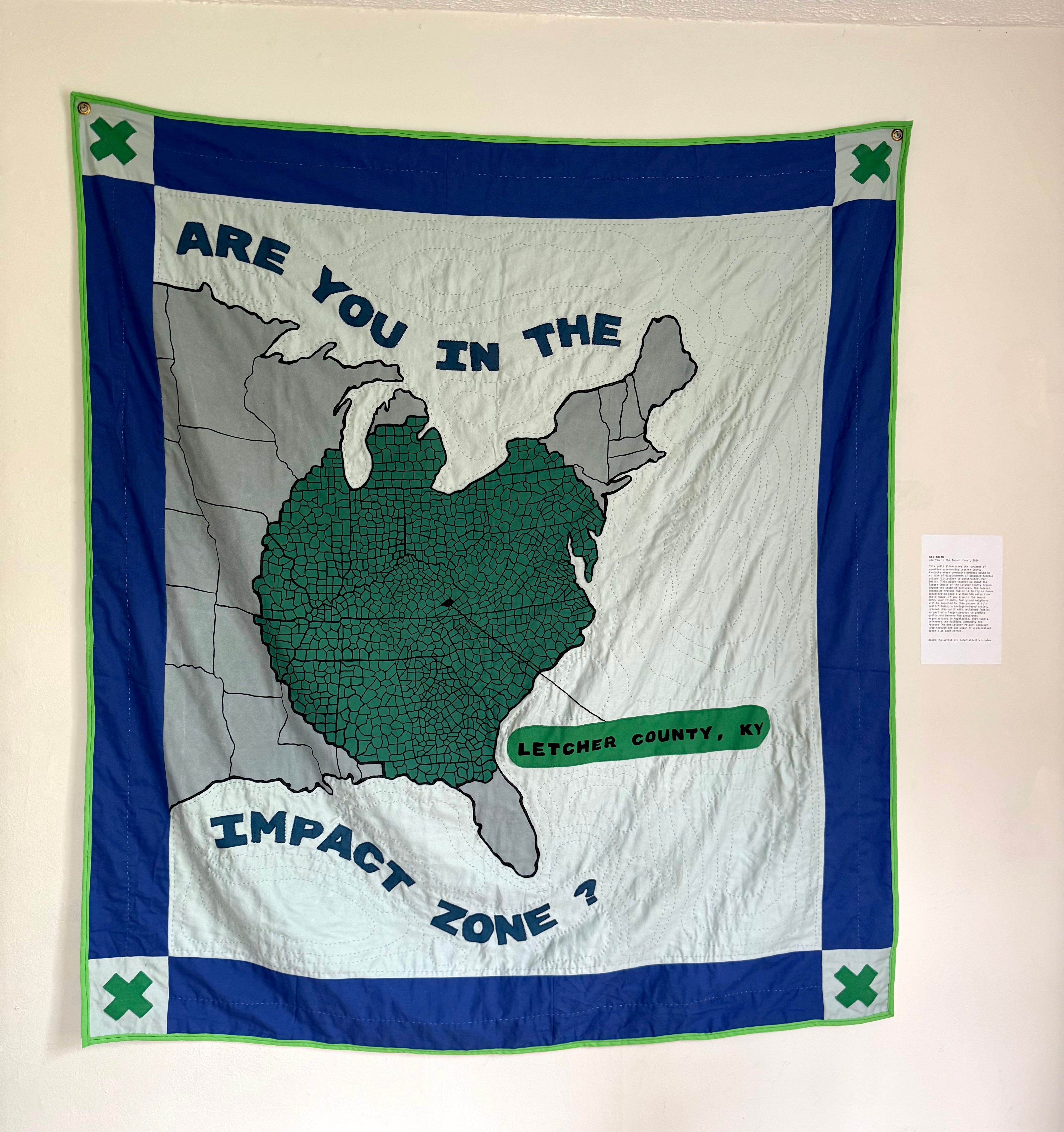
If constructed, FCI Letcher would be the most expensive prison in United States history, with an earmarked budget of $505 million. It is slated to be built on top of a former mountaintop removal coal mine, becoming a site of further harm on a landscape already harmed by industry and climate change. The proposed construction has been called into question by both the Biden and Trump administrations. The No New Letcher County Prison Campaign has drawn national and bipartisan support — especially in light of the ongoing impact of strip mining in the region, and the 2022 floods that devastated the region, amplifying the need for local resources.
As depicted by Smith’s quilt, the impact zone of FCI Letcher stretches north through Michigan, south through northern Florida, west into Missouri, and east along the Atlantic coast, including Washington, DC — urging transregional attention to the widespread displacement caused by the prison-industrial complex and the need for rural-urban organizing throughout the region to oppose FCI Letcher’s construction.
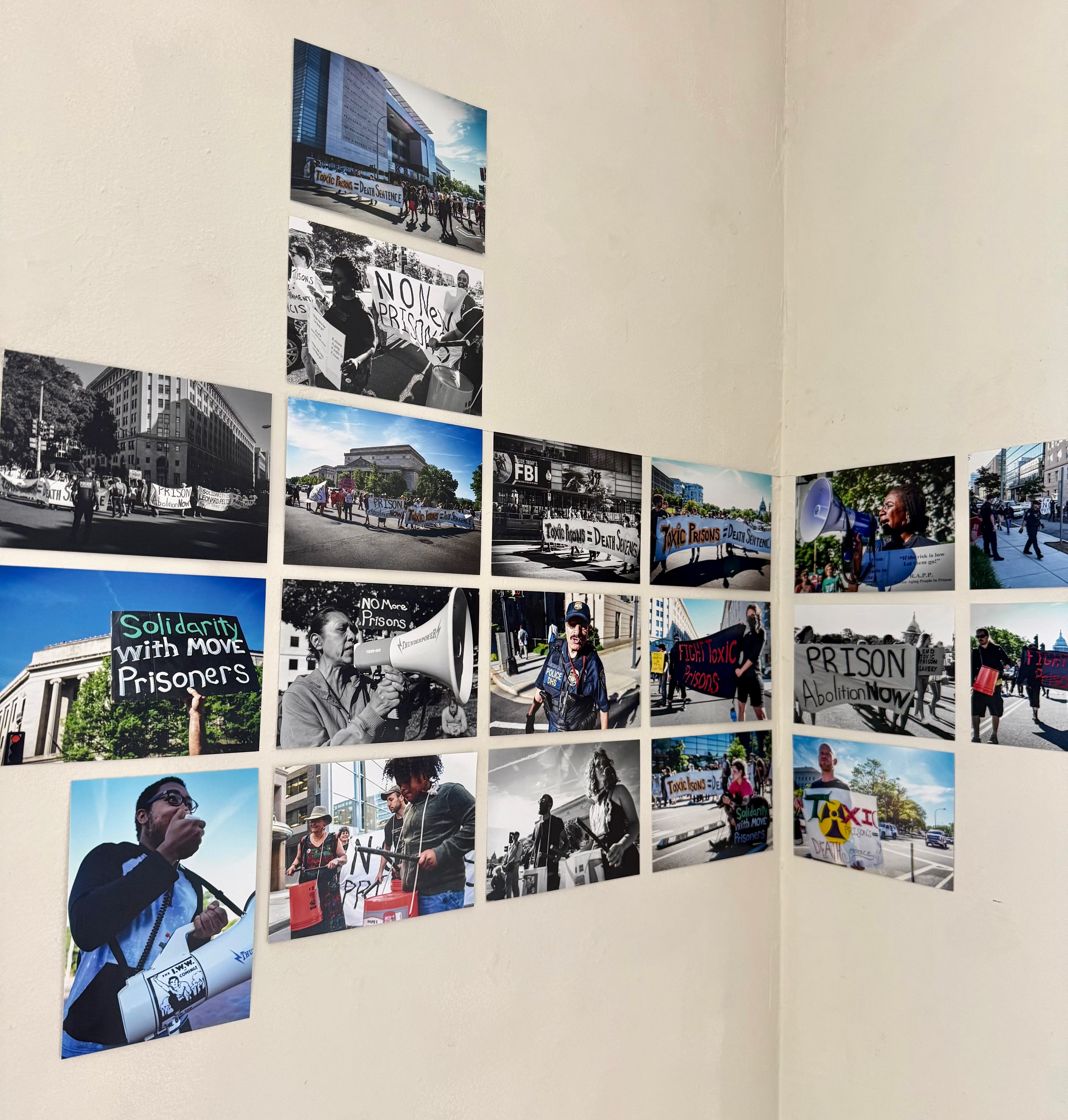
A hallmark of such rural-urban organizing is depicted in the photographs of Lexington-based Jordan Martinez-Mazurek, co-founder of the Campaign to Fight Toxic Prisons (FTP). Since 2015, they have been working with Letcher County organizers to stop the construction of FCI Letcher. Martinez-Mazurek’s array of photographs documents an action of the 2016 FTP Convergence in DC, including a shutdown of the Federal Bureau of Prisons, Department of Justice, and FBI headquarters. FTP’s ongoing mapping project documents the environmental hazards of carceral facilities across the country, providing data and resources to educate communities about their impacts on local and regional levels.


Martinez-Mazurek’s photographs share the gallery with drawings by Comrade Peter Pitt Mukuria, who is currently incarcerated in Maryland and serves in leadership roles with multiple organizing groups. Mukuria’s drawings — particularly of natural landscapes — “served as a temporary mental reprieve from” and peaceful contrast to his own experience of incarceration in Central Appalachia at the supermax Red Onion State Prison, which was the site of a series of protests in 2024 and 2025 due to the prison’s extended use of solitary confinement and administrative racism.
Photographs from Kentucky-born activist and photodocumentarian Jared Hamilton offer portraits and stories of those actively resisting prison construction in Letcher County – including Wayne & Sue Whitaker, whose generational family land is partially within the boundaries of the proposed FCI Letcher construction. The Whitakers currently maintain the land as a game reserve and hope to restore an old general store building on the property — graffitied with “No Letcher Prison” — to have it added to the National Register of Historic Places.
In addition to Hamilton’s documentary photographs, the exhibition includes an experimental coal dust photograph by Jonas N.T. Becker, who is based in Chicago & West Virginia. From his Better or Equal Use series, Becker’s photographic process uses coal salvaged from a former Central Appalachian mining site to depict the Christine West “Bridge to Nowhere” on the former East River Mountain — showcasing the failures of the Surface Mining Control and Reclamation Act of 1977, which mandates that mining companies restore or redevelop such sites “for equal or better public or economic use.”
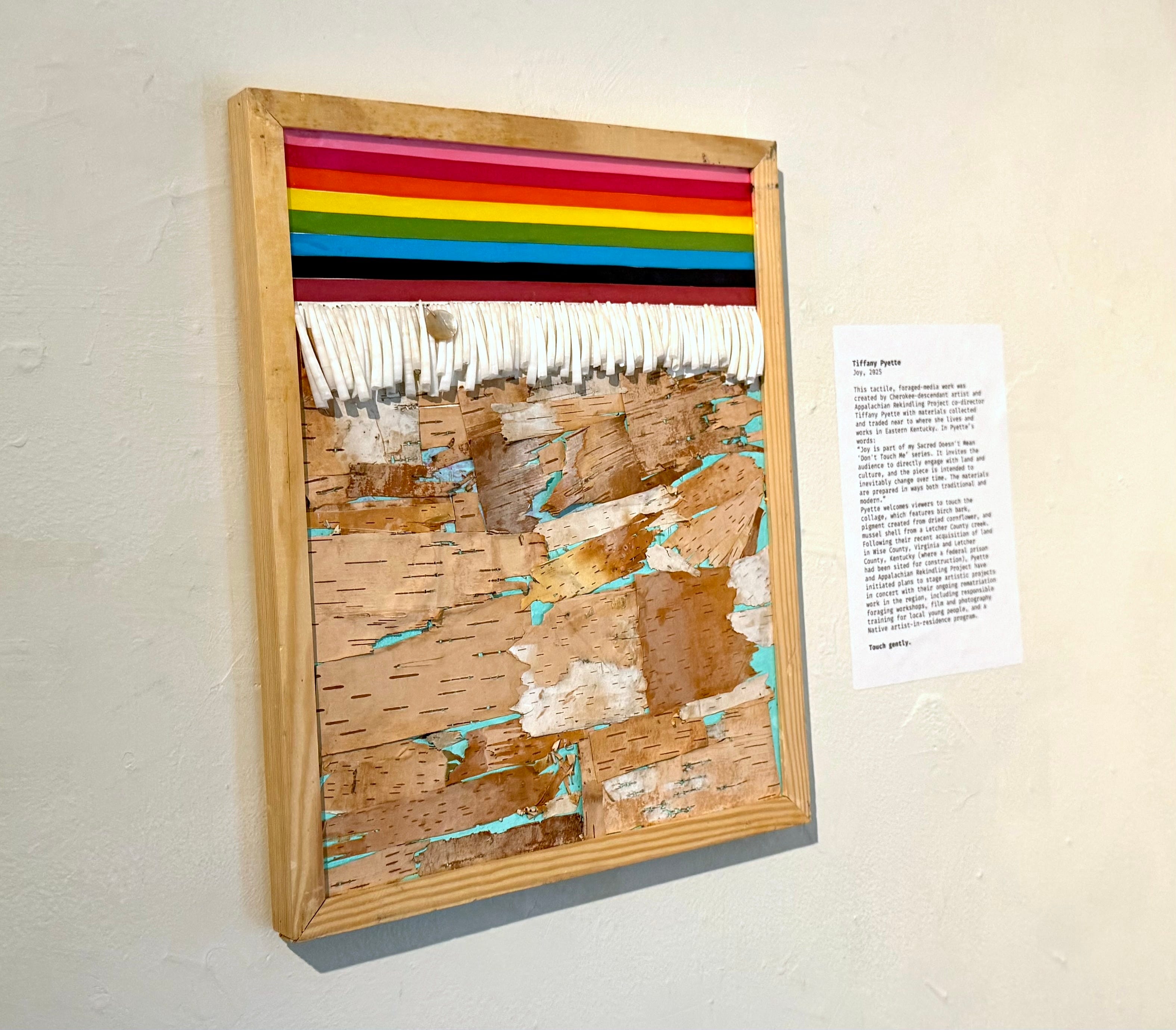
Becker’s coal dust photography hangs in juxtaposition to the artwork of Tiffany Pyette, a Cherokee descendant and founder & co-Executive Director of the Appalachian Rekindling Project (ARP), who is also featured in one of Hamilton’s portraits. Pyette’s piece, “Joy” (2025), is composed of birchbark, dried cornflower pigment, and mussel shells from a Letcher County creek. The collage invites viewers to touch it, directly engaging with the land and representing the more-than-human impacts of the prison-industrial complex in Central Appalachia.
ARP purchased a 63-acre plot of land within the designated boundaries of the proposed FCI Letcher construction, and works toward Indigenous land rematriation practices as a path forward to mitigate harm in the region caused by both mining and carceral industries. The land is now home to the ARP’s campaign “Bison Belong Here,” which seeks to reintroduce bison to the area as both a disruption and an act of care.
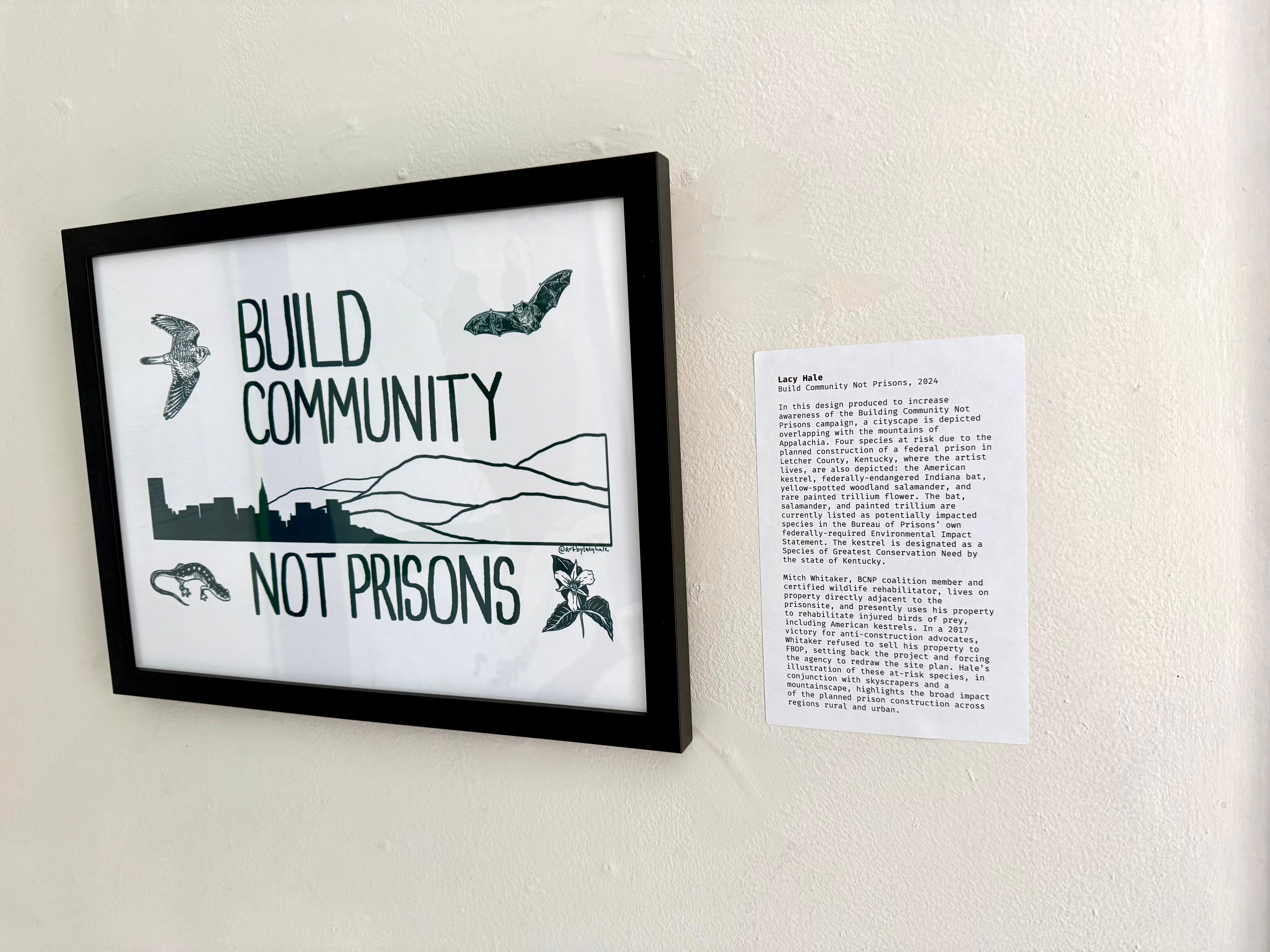
This attention to multispecies kinship echoes the design of Letcher County-based Lacy Hale, which proclaims “Build Community Not Prisons,” bringing awareness to the BCNP campaign and showcasing a city skyline weaving into the general curves of the Appalachian mountains, surrounded by four species at risk due to FCI Letcher construction: the American kestrel, the federally-endangered Indiana bat, the yellow-spotted woodland salamander, and the painted trillium.
Overall, 500 Miles Out presents a transregional effort of rural-urban solidarity, calling attention to the personal, communal, and environmental histories and harms perpetuated by the prison-industrial complex in Central Appalachia and beyond — and the importance of proximate and distributed networks of organizing for disruption, intervention, and care.
I was especially moved by the video of the phone calls to prisoners. A powerful creative way to not only spread compassion, but also to motivate listeners who bear witness to promote justice for the incarcerated and their families. I was very inspired by the article.