
Illustrating the Rural with Nhatt Nichols
Nhatt Nichols is a Port Townsend, Washington-based multidisciplinary artist and writer whose work highlights the entangled ecologies & foodways of rural people & places.

Hopping on Zoom with multidisciplinary artist and writer Nhatt Nichols, whose work I had seen featured through Rural Assembly and Department of Public Transformation’s Beyond the Clock, I was eager to hear about her path to graphic storytelling and her relationship to the rural. Soon our conversation turned toward Nhatt’s lifelong passion for the natural world and intertwining stories of migration, foodways, and environmental care in rural America and beyond.
Nhatt is based in Port Townsend, Washington, a Victorian seaport town on the outskirts of Olympic National Park. “I love the smallness of this community,” she reflects, “and the fact that — and this may be what I love about rural in general – that we are having complicated conversations with each other that we wouldn’t be having if we were in a place where it was easy to avoid each other.”
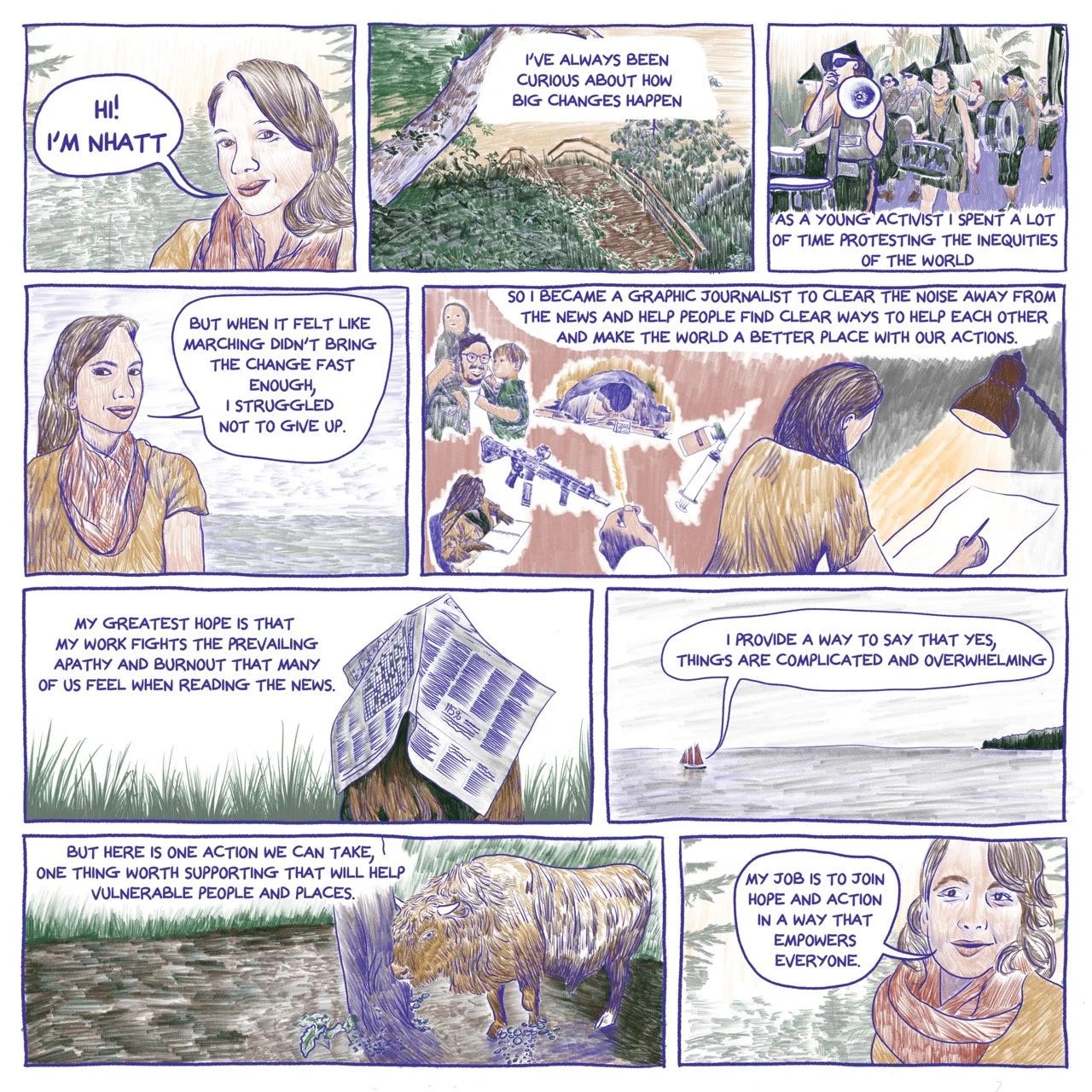
Nhatt grew up a child of survivalists in Eastern Washington in the highlands of the Okanagan in a community of about 800 (now 500), where she would take the bus for 40 minutes to get to school and was readily instilled with a passion for environmentalism. A familiar story for many of us who were raised rural, as soon as she was old enough, Nhatt left, initially moving to Seattle and then across the pond to London, where she lived and worked for over a decade.
London was a formative place for her, both creatively and personally. While working at a punk vegan cafe with a cooperative, Nhatt met a friend who sparked her enthusiasm for comic books. After the death of a partner from a heroin overdose, Nhatt felt compelled to share this experience through drawing.
“I’d never drawn before,” she recalls. “I was 25, 26…I hadn’t really dedicated myself to [being] an artist.” Nhatt felt her main calling was writing, but she was intimidated by the process and the fear of being a “bad writer.”
“So I was like, ‘Okay, comics, this is it. I can draw, and I can write, and then nothing gets to be too precious.’ I was really like, ‘If I can do something in the hardest way possible, I absolutely will,’ which I think might be a rural trait,” she laughs.
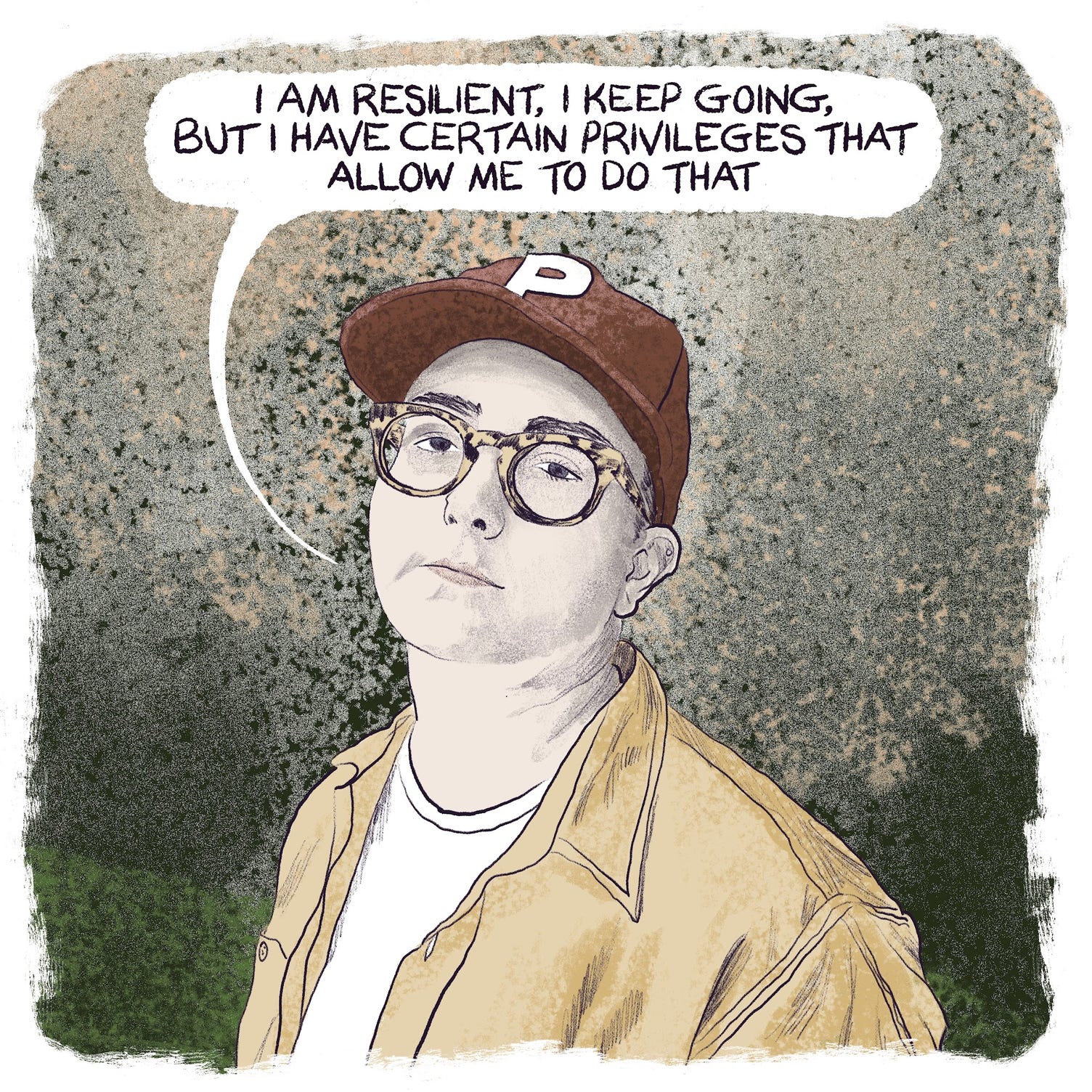
While working as a bike messenger in London, Nhatt delivered a package to the Royal Drawing School and then started to take classes there. She even applied and attended their graduate program, despite not having an undergraduate degree.
“There’s a really big movement to tell stories that are autobiographical, and I’m not a particularly autobiographical person, so [I’m] trying to figure out how to tell stories that are very personal to me and are still comics,” Nhatt reflects. “It suddenly became really clear to me that I wanted to tell stories of other rural people…Being able to explain things in this visual way felt really important.”
After graduating, she found the socioeconomic realities of being a professional working artist in London difficult, and she moved back to the United States: initially to New York, then to Martha’s Vineyard, and then across the continent to her current home of Port Townsend.
A vegan of about 30 years, Nhatt is particularly interested in thinking about and representing food systems through her practice. “ When you’ve got the perfect story for me, it is talking about a producer, somebody with an idea, [or] somebody who’s growing something, and talking about how that is culturally important to them and culturally important to their community,” she reflects.
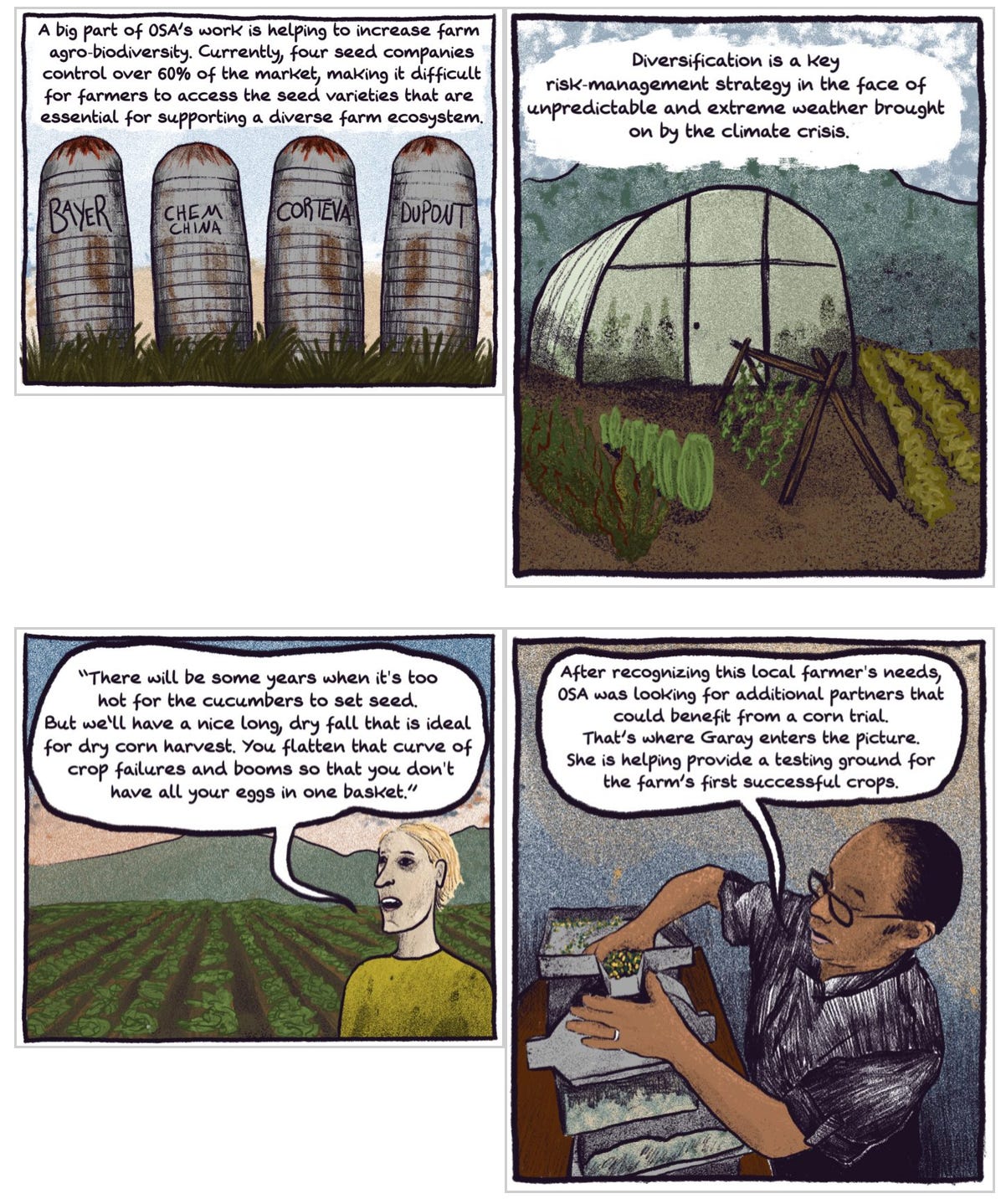
Nhatt’s approach to graphic storytelling is informed by solutions journalism, which focuses on context-based stories about social problem solving, including successes and challenges. One story that intertwines her interests and approach is “Adapting Corn for Tortillas—and New Markets—in the Pacific Northwest,” which she created for Civil Eats (2023). The illustrated report explores how the Organic Seed Alliance (based in Chimacum, WA, along the northeast Olympic Peninsula) works to sustainably bring culturally significant crops (specifically, tortilla corn) to the region in partnership with farmers, chefs, and scientists.
Nhatt finds that discussions of nature and foodways are often bridges in rural communities and go beyond bipartisan political ideologies. During her own recent adventures throughout the Western United States, “everywhere I’ve been…people really deeply understand the need for nature, whether they’re understanding that through hunting rights and practices, or small agriculture,” Nhatt shares. “There’s a relationship with the land.”
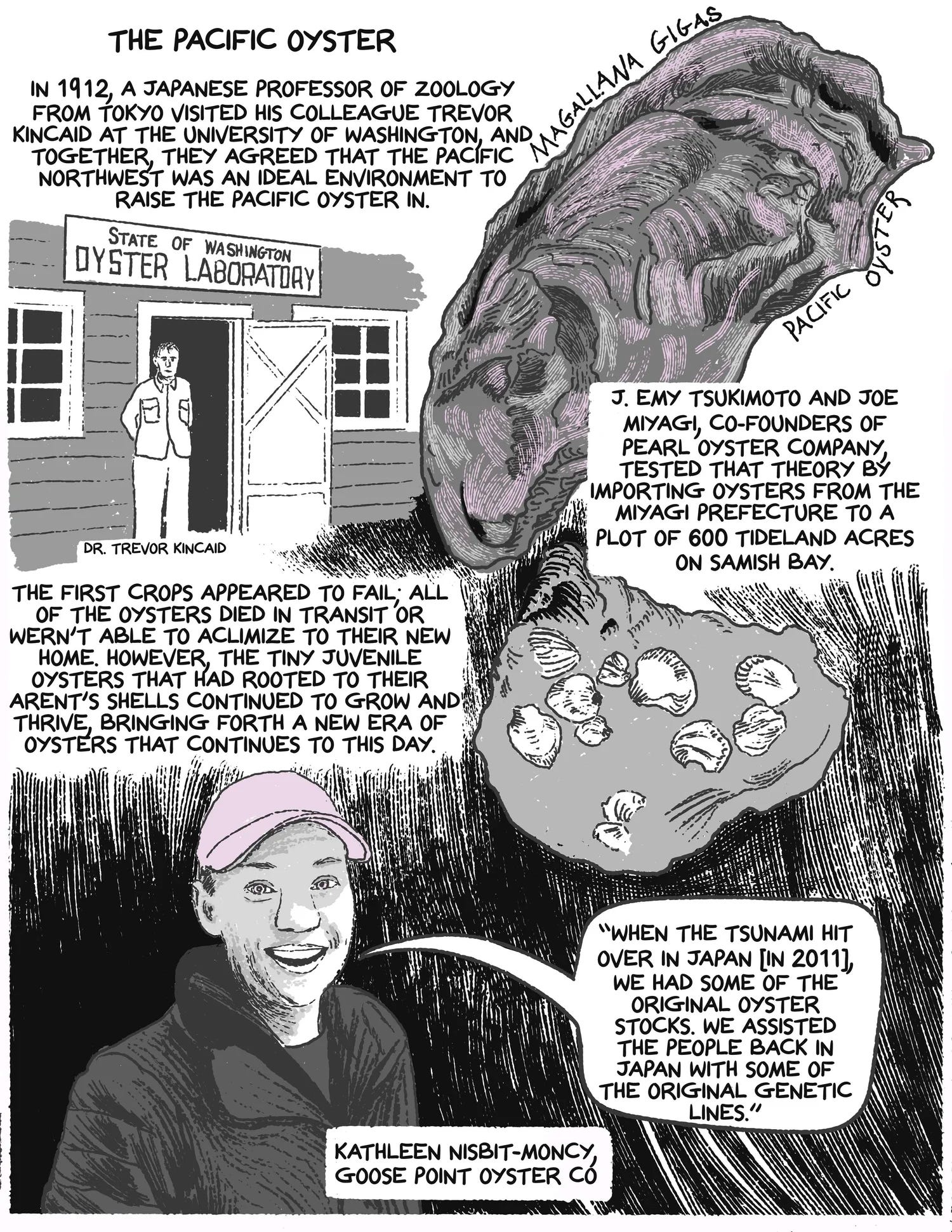
An example she gives comes from her experience creating The Willapa Oyster and its Environs, a comic book and museum show in partnership with the Columbia Pacific Heritage Museum in Ilwaco, WA. The project shares the story of the oyster, its home in Willapa Bay, and its impact on local foodways and economies. While working on the project, one of the oyster farmers began to discuss pesticide usage.
“She was like, ‘Obviously, the pesticides that we want to use aren’t harmful to the environment because why would we harm the environment that our children are in? Why would we harm the environment that my grandparents farmed oysters in?’” Nhatt recalls the farmer sharing. “Regardless of whether or not I agree with her on her stance on this particular pesticide…I really understood that sentiment. If your living is coming from the land, and you are not a hedge fund, and you are just a rural human, you care about the place that you live. And the place that we live is the place where we’re growing food.”
Nhatt’s dedication to rural storytelling goes beyond the edges of our continent, mirroring her transnational artistic journey. You should ask her about how bison in Poland relate to the politics of refugee immigration and neighborliness, or about the guerrilla conservation efforts of European beaver pirates. “Living in rural spaces and creating art in rural spaces is about leaning into complicated narratives,” Nhatt says – and the multifaceted, multispecies narratives she creates reflect them.
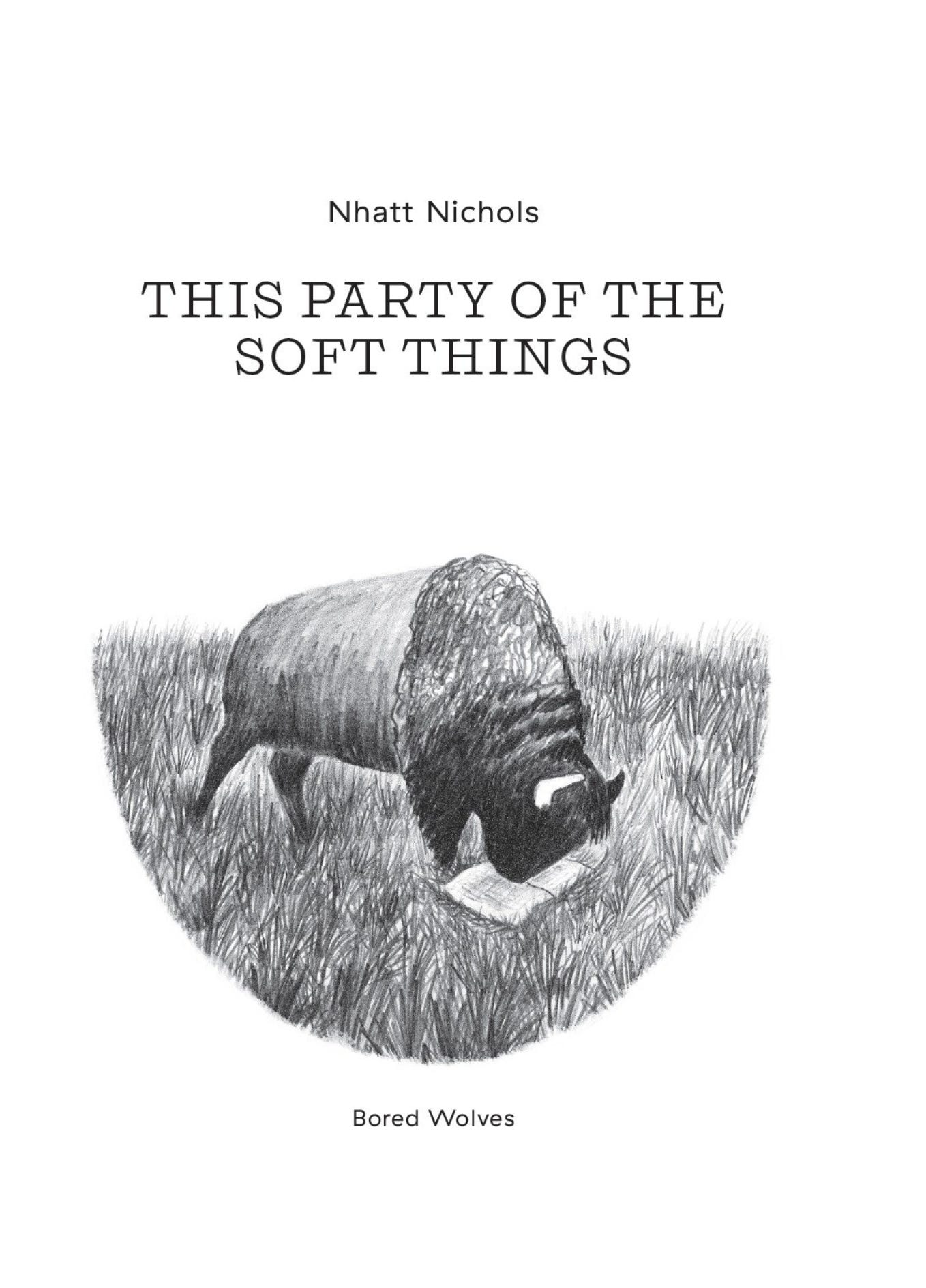
When it comes to her book This Party of the Soft Things (2021; 2026), Nhatt found a way to be an artist, poet, environmentalist, and reporter all at once. She began her storytelling process with environmental research about the impacts of humanity on different species and ecologies, and the potential for extinctions. A book-length poem with graphite drawings, This Party of the Soft Things weaves together ideas of interspecies reciprocity and “being in the world and being of the world” with people and creatures alike.
“It’s a lot about ecological grief but also celebrating the fact that we are part of this world,” Nhatt reflects. “I get very upset when we have this environmentalism that excludes humans because we are not an invasive species.”
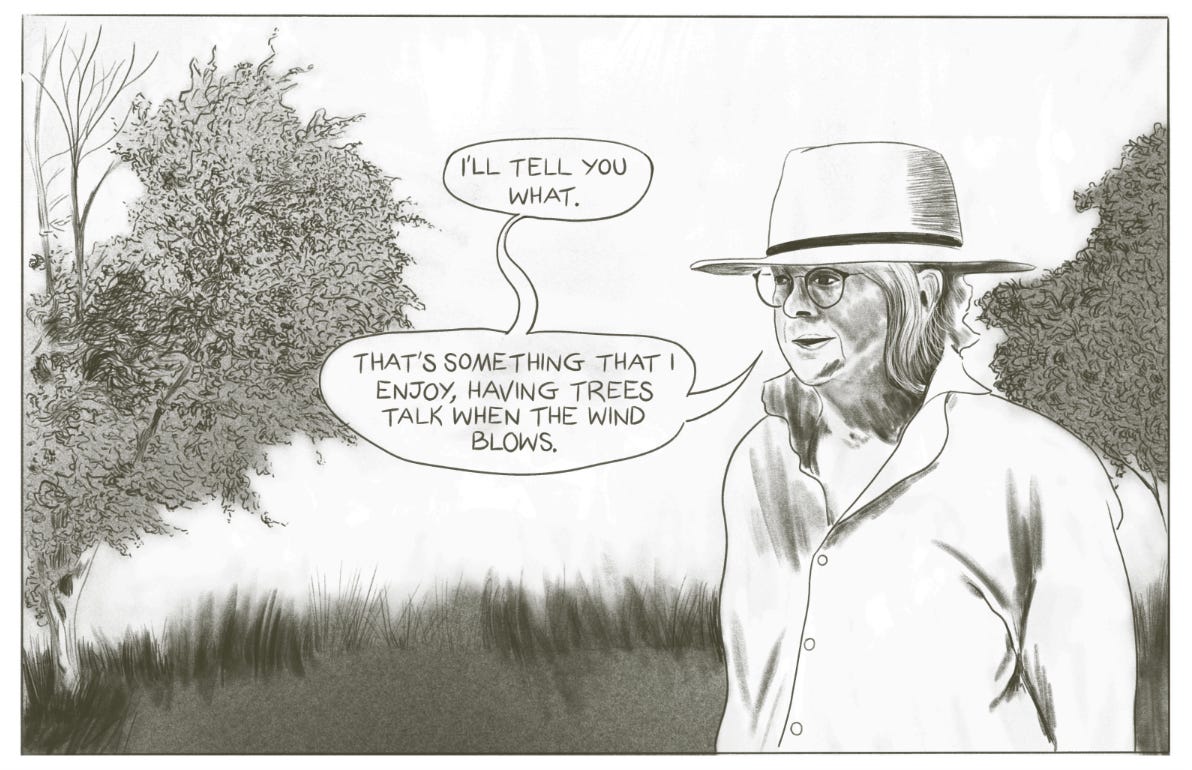
This summer, Nhatt has been finding ways to counter burnout and the uncertainties of being an environmental reporter at this time, turning away from screens and immersing herself in nature and literature for inspiration. In particular, she has been drawn to the book Finding Them Gone by writer & translator Bill Porter (Red Pine). The book shares the stories of ancient Chinese poets while visiting the rural places they lived and sharing the struggles of their lives – often mirroring the struggles of working artists today.
“Often poets wanted to be of service to their country or of service to their communities, but they also wanted to know beauty and have beauty involved with it,” reflects Nhatt.
Nhatt Nichols’ book, This Party of the Soft Things, re-releases in the United States this September through Chin Music Press. You can also find her work in The Daily Yonder and the Solutions Journalism Network.
Resources
Drawing Resilience (Rural Assembly, ongoing)
“Adapting Corn for Tortillas—and New Markets—in the Pacific Northwest,” (Civil Eats, 2023)
The Willapa Oyster and its Environs (The Daily Yonder, 2025)
Walking Constellations: A Prairie Oral History Comic (Prairie Sea Projects, 2025)
Bill Porter (Red Pine), Finding Them Gone: Visiting China’s Poets of the Past (Copper Canyon Press, 2016)
This was an excellent read, thank you!
Thank you for another 'good news' article. I like to think of Nhatt Nichols' story as verbing a dream.